How a Reward System Can Transform Your Child's Chore Routine — and Why It Works
Posted on February 19, 2026 · 5 min read
The Chore Struggle Is Real
Every parent knows the drill: you ask your child to clean their room, and suddenly they can't hear you. You repeat yourself three times, raise your voice, and eventually just do it yourself. Sound familiar?
You're not alone. Studies show that one of the top frustrations for parents with children aged 5–12 is getting kids to complete household tasks without constant nagging. The result? Stressed parents, frustrated kids, and a household dynamic that nobody enjoys.
But what if there was a way to turn chores into a game kids actually WANT to play?
The Science Behind Reward Systems
The concept isn't new — behavioral psychologists have studied reward systems for decades. Here's what the research tells us:
The Harvard Grant Study
The Harvard Grant Study, one of the longest longitudinal studies in history spanning over 75 years, found that children who participated in household chores were more likely to become successful, self-sufficient adults. The key finding? Kids who helped around the house developed stronger work ethic, greater empathy, and better problem-solving skills that carried into adulthood.
The University of Minnesota Research
Researcher Marty Rossmann at the University of Minnesota discovered that the best predictor of young adults' success in their mid-20s was whether they participated in household tasks starting at age 3 or 4. Children who began chores early developed a sense of responsibility that lasted into adulthood. Interestingly, those who didn't start until age 15 or 16 saw the opposite effect — forced participation actually backfired.
Positive Reinforcement Works
According to research in behavioral psychology, positive reinforcement — rewarding desired behavior — is far more effective than punishment in shaping long-term habits. When children associate completing a task with a positive outcome, they're naturally motivated to repeat that behavior. The key is making the reward immediate, consistent, and proportional to the effort.
Why Traditional Approaches Fail
Most parents default to one of these approaches:
- Nagging: "I've told you five times to clean your room!" — This creates resentment and teaches kids to tune out.
- Threats: "No screen time until you finish!" — This creates a negative association with chores and can damage the parent-child relationship.
- Doing it yourself: "It's faster if I just do it." — This teaches children they don't need to contribute.
None of these build the intrinsic motivation that leads to lasting habits. Children need to feel a sense of accomplishment, not dread.
The Gamification Solution
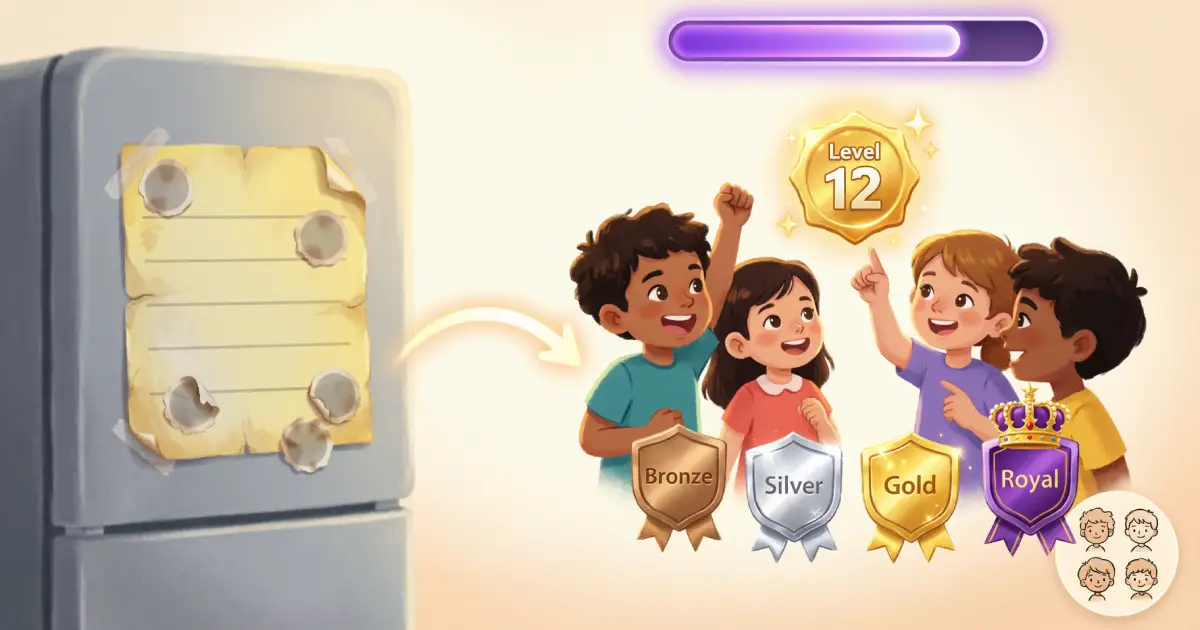
This is where gamification changes everything. By applying game mechanics — points, levels, achievements, and rewards — to everyday tasks, you transform chores from something kids resist into something they actively pursue.
Here's why it works:
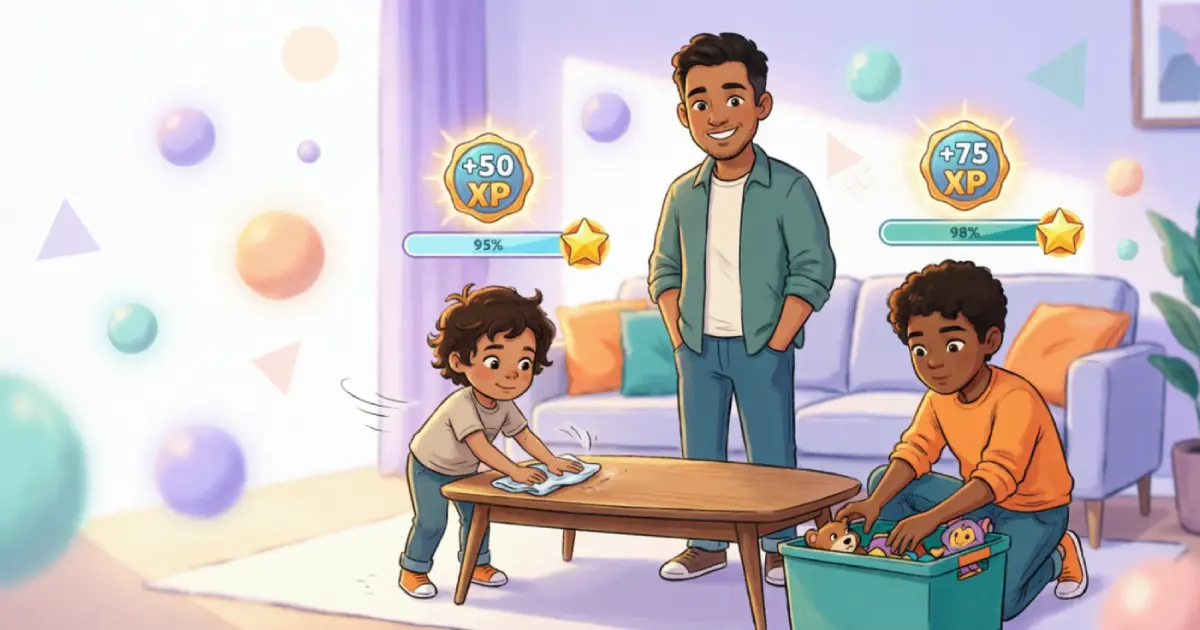
- Immediate feedback: Kids see their progress instantly through XP points and level-ups.
- Sense of achievement: Completing a "quest" feels far more exciting than just "doing chores."
- Autonomy: Children choose which tasks to tackle and what rewards to aim for.
- Visual progress: Progress bars and achievement badges make effort tangible and visible.
Age-Appropriate Strategies
The reward system should evolve with your child's development:
Ages 3–5: The Foundation
Start with simple tasks: putting toys away, feeding pets, or placing clothes in the hamper. At this age, the reward should be immediate and visual — a sticker chart, a star on a board, or a digital badge they can see right away. The goal isn't perfection; it's building the habit of contributing.
Ages 5–8: Building Momentum
Introduce more structured tasks: making their bed, setting the table, or helping with laundry. At this stage, a point-based system works beautifully. Children can earn XP for completed tasks and spend points on rewards they've chosen — extra screen time, a special activity, or picking the family movie. This teaches delayed gratification and basic goal-setting.
Ages 8–12: Growing Independence
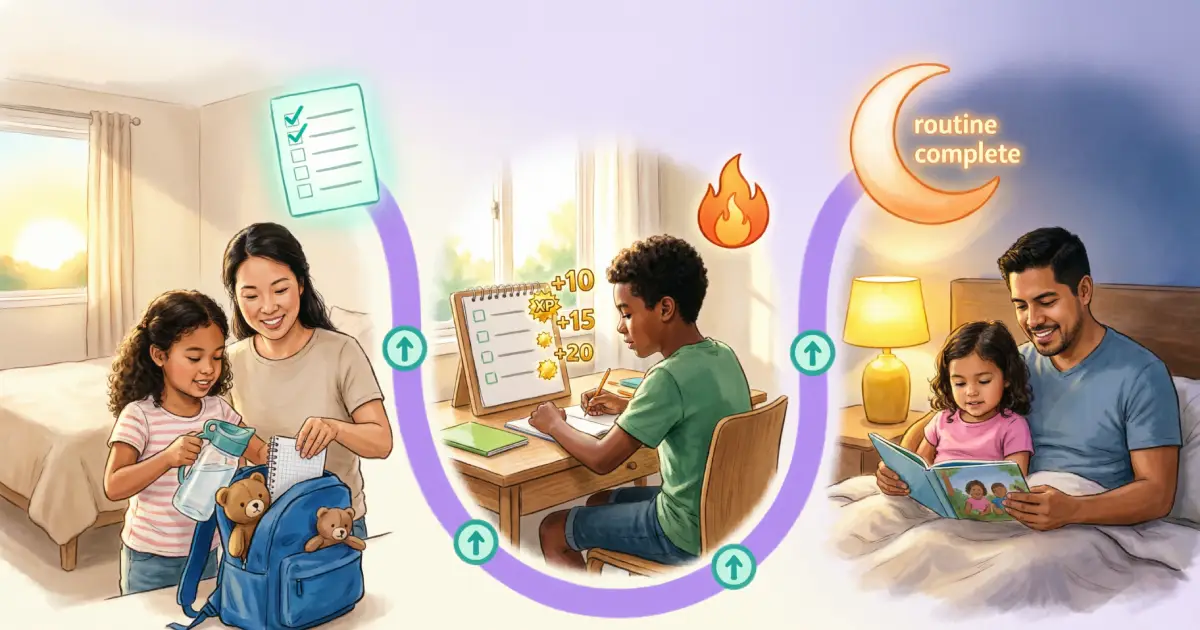
This is the sweet spot for gamification. Kids at this age understand goals, progress, and competition. Give them harder quests with bigger rewards: cooking a simple meal, vacuuming, or organizing the garage. Introduce weekly challenges, streaks for consistency, and achievement milestones. The reward system should mirror the progression they're used to in video games — each level gets harder, but the rewards get better.
How to Do It Right: 5 Golden Rules
- Let kids choose their rewards: When children pick what they're working toward, motivation skyrockets. Create a reward catalog together and let them set their own goals.
- Be consistent: The system only works if it's applied every single time. Reward completion, not just results. Did they try their best? That counts.
- Keep rewards proportional: A small task earns a small reward. Don't offer a new toy for making the bed — but an extra 15 minutes of playtime? Perfect.
- Celebrate effort, not just perfection: A 6-year-old's attempt at making the bed won't look like yours. Celebrate the effort. Perfection comes with practice.
- Gradually shift to intrinsic motivation: Over time, reduce the frequency of external rewards and help children find pride in contributing to the family. The goal is to make responsibility feel natural, not transactional.
Turn Chores Into a Game Kids WANT to Play
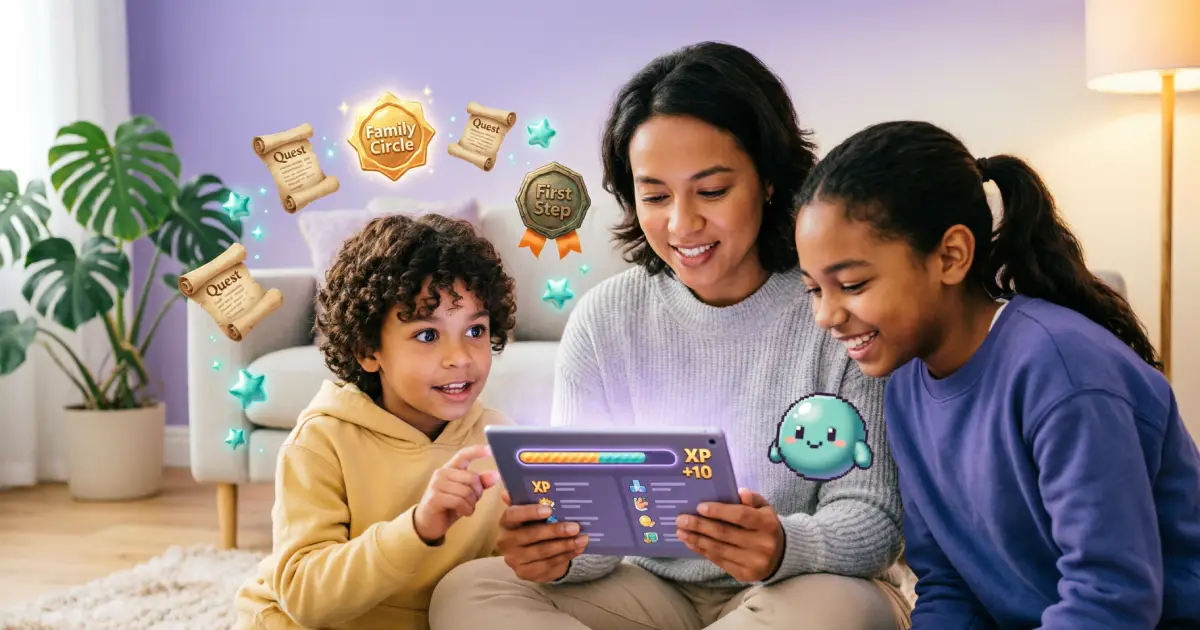
This is exactly what Questmo was built for. Instead of nagging, threatening, or bribing — Questmo transforms everyday household tasks into exciting quests that kids genuinely look forward to completing.
With Questmo, you can:
- Assign tasks as quests with XP rewards and difficulty levels
- Watch your kids level up as they build consistent habits
- Let them earn and unlock premium avatars and achievements
- Set up a reward catalog where kids redeem their earned points
- Track progress with family analytics that show real growth
- Manage everything from a single family circle — both parents included
No more nagging. No more battles. Just kids who are excited to contribute to the family — because it feels like a game.
"The secret to raising responsible kids isn't making chores feel like work — it's making them feel like play."
Ready to transform your family's chore routine? Download Questmo and see the difference a gamified reward system can make.